Part I
Foundations
- The Evolution of AI
- AI Models and Platforms — Choosing the Right Tool
- Prompt Engineering — Giving AI Clear Orders
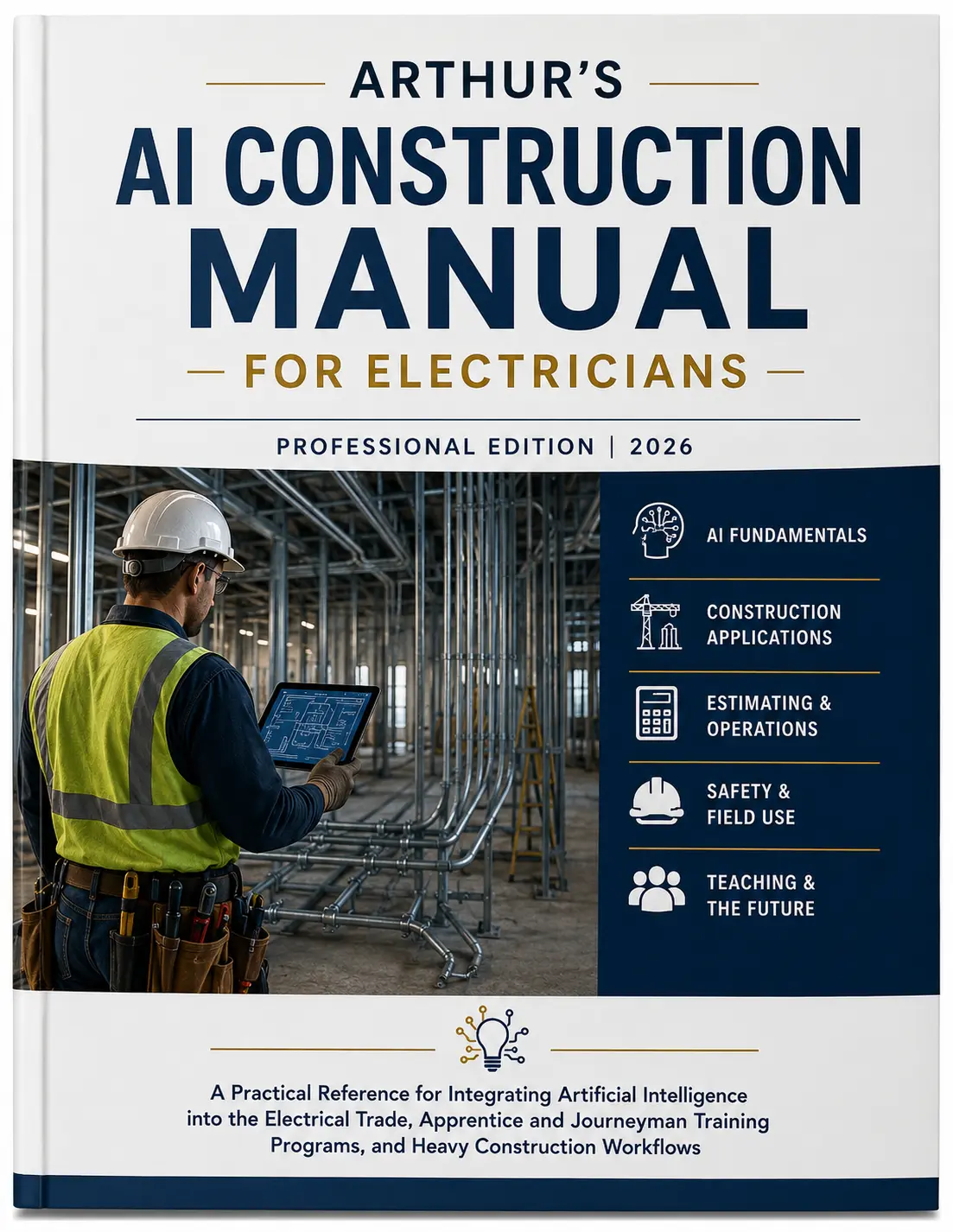
Professional Edition · 2026
A practical reference for electricians, foremen, project managers, owner's representatives, and the training programs preparing the next generation.
“AI does not replace experience. AI enhances experience.”— Arthur D. MacNeil
About the manual
Artificial intelligence is arriving in construction faster than most practical guidance can keep up.
Arthur's AI Construction Manual for Electricians bridges the gap between modern AI and the day-to-day work of the electrical trade. It explains how to use AI for familiar tasks—field notes, RFIs, estimates, safety documents, meeting minutes, project records, and training—without surrendering professional judgment.
Readers learn how to give AI clear orders, compare platforms, ground research in trusted source material, protect confidential information, recognize hallucinations, and keep a qualified person firmly in the loop.
AI in construction
Building Information Modeling brings design, coordination, and field information into one connected workflow. This short feature introduces how integrated BIM can help construction teams see the work more clearly and make better-informed decisions.
Who it is for
Build confidence with AI through clear, trade-specific examples.
Watch video02Turn field knowledge into stronger logs, RFIs, plans, and crew communication.
Watch video03Organize project information, draft faster, and protect human judgment.
Watch video04Introduce responsible AI through practical seminars and structured curriculum.
Watch videoAn apprentice uses AI-supported information alongside approved drawings and experienced supervision in a controlled training environment.
Explore the Human-in-the-Loop principle, TCREI prompting method, a daily-log example, NEC verification guidance, and the future of smart infrastructure.
Read the samples →About the authorFrom the Local 103 apprenticeship program and the tools to mission-critical construction, owner's representation, and AI education.
Read Arthur's story →Inside the book
Thirteen chapters, continuing-education modules, a lessons-learned final chapter, and field-reference appendices.
Beyond the book
The manual can serve as the foundation for introductory seminars, JATC curriculum, role-specific workshops, and roundtable learning for experienced or retired members.
Discuss a training programCommon questions
It is written for electrical construction professionals—including apprentices, journeymen, foremen, project managers, owner's representatives, retirees, and training programs that want a practical introduction to modern AI tools.
No. This is a working trade manual, not a computer-science textbook. It focuses on using existing AI platforms for familiar construction tasks such as field notes, RFIs, estimates, safety documents, meeting minutes, and project records.
AI can help locate, organize, or explain possible information, but it is not the authority. Every result must be checked against the official codebook, adopted code and amendments, project documents, and the qualified professional responsible for the decision.
The manual includes proposed formats for a two-hour seminar and an eight-week apprentice and journeyman curriculum. Additional JATC, local-union, retiree, and role-specific training can be developed around the needs of each group.
Professional Edition · 2026
Start with one useful task. Verify the result. Build confidence from there.
Find the book on Amazon